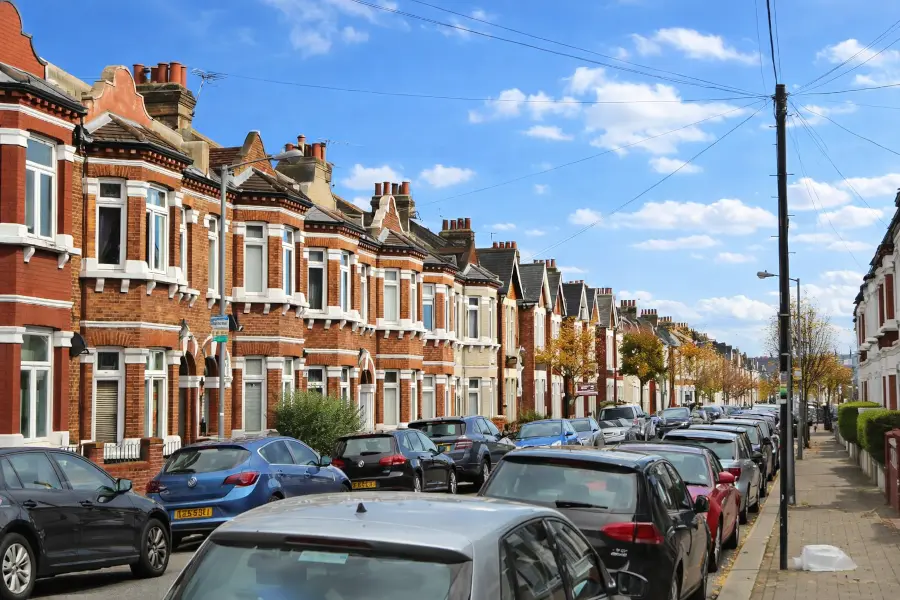
Moving house in London is rarely difficult because of the packing. It is difficult because of everything around it.
A move that looks simple on paper can become stressful once you add parking restrictions, charge zones, flats, shared entrances, lift bookings, estate access or a road that is controlled by the wrong authority.
The good news is that most London moving problems are predictable. If you check the right things early, they are usually avoidable.
This guide is the main overview for moving house in London. It helps you work out what matters most for your move, what affects timing and cost, and when you should move from a simple plan to one of the more detailed London guides.
If you want a broader week-by-week timeline as well, use our complete moving house checklist.
Moving house in London: five things to check first
London moves have a different set of complications to most. These are the ones that catch people out most often.
- Confirm who manages your street (borough council or TfL)
- Make sure there’s legal space for the van to stop
- Check whether your route crosses the Congestion Charge or ULEZ
- Confirm lift bookings, loading bays or stair access at both properties
- Book earlier if moving at month-end, on a Friday or during summer
Small checks like these prevent most London moving problems.
Why moving in London is different
Moving house is stressful anywhere. In London, there are simply more variables.
Street-level parking restrictions are tighter. Roads may sit under different authorities. Many homes are flats with shared access points, lift systems or booked loading areas. Traffic patterns and peak booking periods can affect how easy the day is to organise.
Most moving-day issues do not happen because of the furniture. They happen because access, stopping or permissions were not confirmed early enough.
Once you understand where problems usually arise, planning becomes much simpler.
What kind of London move are you planning?
Usually more straightforward when:
- access is easy at both addresses
- the van can stop legally without much difficulty
- there are no building bookings or red-route issues
Usually means one issue needs closer attention:
- uncertain stopping space
- a charge-zone route
- a flat with lift or booking rules
Usually needs more joined-up planning when:
- access is difficult
- stopping is uncertain
- street and building issues stack together
Choosing the right type of moving help in London
Before you think about permits, route planning or charge zones, decide what level of moving support your move actually needs.
In London, that decision is rarely based on furniture volume alone. Access, stairs, lift availability, parking conditions and how much physical help you want can all affect the best option.
Self-drive van hire
Hiring a van and handling the move yourself may suit very small moves where:
- you are transporting a limited number of items
- access at both properties is straightforward
- you are comfortable driving on busy London streets
- you are happy handling loading, parking and timing yourself
However, you will also be responsible for working out stopping rules, road charges and any access complications. In denser parts of London, that can add more complexity than people expect.
For very simple moves, it can work well. It usually demands the most planning from you.
Man and van services
A man and van service is often a good fit for London flats, smaller homes and moves where flexibility matters.
It typically works well when:
- packing is already done, or nearly done
- the overall volume is manageable
- you want optional help with loading and unloading
- you are moving from or to a flat, shared building or tighter residential street
Smaller vehicles can also be easier to position where space is limited.
For many London moves, this level of support is enough.
Full removals services
A full removals service may be more appropriate if:
- you are moving from a larger property
- you need professional packing as part of the move
- the move involves heavier, bulkier or specialist items
- you want more of the process handled for you
This option usually includes more labour and planning support, which can reduce pressure on the day itself.
How to decide
The right option usually depends on:
- the size and complexity of the move
- how easy or awkward access is at each property
- how much lifting and carrying help you want
- whether packing support is needed
- how much of the planning you want to manage yourself
In London, access, stopping arrangements and building setup often matter more than distance alone.
Costs, booking and timing in London
There is no single price for moving house in London because quotes are shaped by a mix of practical factors.
These commonly include:
- The amount of furniture and boxes
- The van size required
- The level of help requested
- Whether packing or dismantling services are needed
- Access at both properties, including stairs, lifts and carry distance
- Whether the van can stop easily or requires extra planning
All of these affect how long the move is likely to take — and in London, time is often the biggest factor in overall cost.
For a more detailed breakdown, see our London moving costs guide or our guide to man and van pricing for a broader overview.
Is a Man and Van Cheaper Than a Full Removals Service?
For smaller moves, a man and van service can often be a good-value option — particularly if you’re happy to handle packing yourself and only need help with transport and loading.
A full removals service may be more suitable for larger homes, heavier items or moves where you want more of the process managed for you.
The decision is not just about price. In London, it also depends on access, the amount of help you need, and how much complexity sits around the move itself.
Service Comparison at a Glance
| Option | Best For | Level of Support |
|---|---|---|
| Self-Drive | Very small moves with straightforward access | You handle everything |
| Man and Van | Flats, smaller homes and flexible London moves | Driver + optional loading help |
| Full Removals | Larger homes or more complex moves | Multiple movers + packing available |
In London, access, stopping arrangements and building setup often influence this choice more than distance alone.
How Far in Advance Should You Book?
Demand in London often peaks:
- At the end of the month
- On Fridays and Saturdays
- During summer
- Around university term dates
If you’re moving during one of these periods, booking earlier usually gives you more flexibility on time slots, van sizes and support options. Mid-week dates away from month-end are often less pressured.
When London Moves Are Busiest
Our internal booking data shows clear demand peaks — useful if you want more choice on time slots and van sizes.
Practical takeaway: if you’re aiming for a Friday, Saturday or month-end date, booking earlier usually gives you more flexibility — even if the move itself is relatively simple.
What to Check Before Comparing Quotes
When comparing quotes, it helps to be realistic about the factors that can affect time and planning in London:
- Access at both properties
- Whether the van can stop close to the entrance
- Whether parking needs to be arranged in advance
- Whether lift bookings or building permissions are required
- Whether your move falls during a busy period
Being clear about these details makes it easier to compare like-for-like quotes and choose a service level that actually fits the move.
The 4 issues that cause most London moving problems
Most London moves do not become difficult because of the items being moved. They become difficult because one of the practical constraints around the move was underestimated.
Assuming the Van Can Stop Outside
The most common problem is treating kerbside space as a given. In London, that is rarely something to assume.
Restrictions can change by street, time of day and road type. If the vehicle cannot stop where expected, everything else becomes slower.
If you need to work out what is allowed at the kerb, see our guide to CPZ, yellow lines and loading rules in London.
Finding Out Too Late Who Controls the Road
Not every London road follows the same process. Some are borough-managed, while others fall under Transport for London.
That usually only becomes a problem when permission is needed and the wrong route is taken. At that point, timing can become the issue rather than the move itself.
If permission may be required, see our guide to parking permits, suspensions and dispensations or, for TfL-managed roads, red routes and dispensations.
Treating Charge Zones as an Afterthought
Route costs are not usually the biggest part of a London move, but they can still affect planning, quote clarity and vehicle choice.
When they are left until the last minute, they tend to create unnecessary uncertainty rather than a genuine logistical problem.
For more detail, see our guide to ULEZ and Congestion Charge for moving vans.
Underestimating the Building, Not the Distance
In London, the building itself is often the hidden challenge. Shared entrances, booked lifts, loading bays, stairs and long internal walks can all slow a move down.
This is why a short-distance move can still take longer than expected if access at either address is awkward.
If your move involves a flat, shared building or estate access, see our guide to London flats, estates and access logistics.
Parking, stopping and permissions: what to check first
Once you know where the move starts and finishes, the next question is simple: can the van stop where it needs to, at the time you need it to?
In London, the answer depends on the street, the restrictions in place, and whether normal loading rules are enough for the move you are planning.
Check the Street and Time First
The first step is to check what applies on the exact road and at the exact time of your move. On some streets, short-term loading may be workable. On others, local controls make that unrealistic.
If you need to understand the rules at street level, see our guide to CPZ, yellow lines and loading rules in London.
Decide Whether Loading Will Be Enough
Some moves can rely on normal loading rules because the stop will be short and access is simple. Others need more certainty because the job is likely to take longer, access is awkward, or there is no suitable legal space nearby.
When that happens, formal permission may be the more realistic option.
For a practical guide to when this is needed, see parking permits, suspensions and dispensations for London moves.
Check Which Authority Manages the Road
If formal permission is needed, the next step is to work out who manages the road. Borough councils and Transport for London do not always use the same process.
If the move involves a TfL-managed road, see our guide to red routes and dispensations. If it is a borough-managed road, follow the relevant council’s parking process.
Practical takeaway
- Check the exact street and time first
- Work out whether normal loading is realistic for your move
- Only move into the permissions process if loading will not be enough
- Use the correct authority from the start
The aim is not to overcomplicate the move. It is to avoid relying on a stopping arrangement that does not work in practice.
Congestion Charge and ULEZ: what to check before you move
London’s road user charging schemes can affect a move depending on the vehicle, the route and where the pickup or drop-off happens.
The two main schemes are:
- The Congestion Charge, which applies in central London during set charging hours
- The Ultra Low Emission Zone (ULEZ), which can apply daily if a vehicle does not meet the required emissions standards
You do not need to learn every rule in advance. The important step is to check whether either address falls within one of these zones and to understand how any charges are handled as part of your move.
If you want a more detailed explanation, see our guide to ULEZ and Congestion Charge for moving vans.
Practical Approach
Before moving day:
- Check whether either address is within a charge zone
- Confirm whether the vehicle used for your move may be affected
- Make sure responsibility for any applicable charges is clear in advance
Different providers handle this differently, so it is worth checking before you book.
Flats, estates and access planning
In London, the property layout often affects the move more than the distance between addresses.
That is especially true for flats, estates and managed buildings, where the challenge is often the route between the vehicle and the front door rather than the journey itself.
Why Access Changes the Time Needed
Moves become slower when there are more stages between the van and the property: stairs, lifts, corridors, courtyards, service entrances or loading bays.
Each extra stage adds handling time, even when the move is not especially large.
Which Building Details Matter Most
In shared or managed buildings, progress often depends on practical details that are easy to overlook: whether a lift needs booking, whether a loading bay is available, whether access is controlled, and how far items need to be carried once the vehicle has stopped.
For a more detailed checklist, see our guide to London flats, estates and access logistics.
London Access Insight
London access reality: many moves start or finish somewhere other than the ground floor. Across our London moves, 54% involve a collection or delivery point that isn’t on the ground floor. That is one of the main reasons access planning matters so much in London — especially in flats and shared buildings.
What that changes in practice: moves involving a non-ground-floor property are more likely to need longer booking windows.
Practical takeaway: if either address is not on the ground floor — whether that means stairs, lift access, longer internal routes or booked loading areas — allow extra time. In London, access is one of the biggest factors in how quickly a move runs.
Moving day checklist
By moving day, most of the planning should already be done. The aim now is to avoid small oversights that can cause unnecessary delays.
Before the Van Arrives
- Re-check any parking or stopping restrictions for your time slot
- Make sure any suspension, dispensation or building booking is confirmed
- Confirm lift access, entry arrangements or concierge instructions if relevant
- Keep keys, fobs and important contact numbers easy to reach
While Loading
- Keep loading as continuous as possible
- Stage smaller items near the entrance in advance
- Protect communal areas if the building requires it
- Keep hallways, entrances and shared paths clear
Organisation helps maintain momentum, particularly in shared buildings or tighter access conditions.
During the Journey
- Allow for variable London traffic conditions
- Avoid relying on tight arrival-time assumptions between properties
- Keep your phone available in case access or stopping arrangements need to be confirmed
At the Delivery Address
- Confirm the planned stopping space is still usable
- Re-check lift, stair or entry access before unloading starts
- Coordinate larger or awkward items first if access is tighter inside the building
A few minutes of coordination when you arrive often saves much more time later.
FAQs
Flats, shared buildings, controlled parking and charge zones can all affect how straightforward the day itself feels.
Booking earlier also gives you more flexibility if access, stopping arrangements or building rules need to be confirmed in advance.
Shared buildings, lift availability, restricted loading space and longer carry distances can all make a move take longer than expected.
If your move involves parking restrictions, loading controls or formal permissions, resolving that early makes the rest of the move much easier to plan.
This is one of the main reasons London moves can run longer than expected, even when the distance is short.
In London, stopping arrangements, stairs, shared-building access and busy booking periods can all influence the final cost.
The more constraints there are around the property or the street, the more important it is to check details early.
This guide gives you the overview, and the more detailed London guides linked above explain each issue in more depth.
About Compare The Man and Van
Compare The Man and Van helps people compare quotes from vetted, fully insured man and van drivers across London and the UK.
Our London moving guides are written by our in-house team using insight from real bookings, so the advice reflects the kinds of access, parking, loading and pricing issues that come up on actual moves.
When you compare quotes with us, you can see live prices from trusted local drivers and choose a mover that fits your move, your budget and the level of help you need.
Ready to compare London man and van quotes?
Once parking, access, timing and the level of help are clear, it becomes much easier to compare quotes properly and choose the right setup for your move.
Compare London man and van quotes


