- At a glance
- The best order to pack
- When to start packing
- What to pack first
- What to leave until last
- A room-by-room packing plan
- How to label moving boxes
- How to pack fragile, heavy and awkward items
- Packing mistakes that slow a move down
- A simple packing checklist
- FAQs
- Related moving guides
Back to top
Packing tips for moving house at a glance
- Start with what you do not use, such as storage areas, spare rooms, books, and seasonal items.
- Pack by room, not at random, so boxes are easier to place and unpack later.
- Keep last-use items out until the final day or two, including toiletries, chargers, bedding, and basic kitchen essentials.
- Pack for unloading, not just leaving, with clear labels and better handling for fragile, heavy, and awkward items.
- Use smaller boxes for dense items and keep loose parts, cables, and fittings with the item they belong to.
The best order to pack for a house move
If you want packing to stay manageable, focus on order rather than speed. Packing quickly is not much help if it leaves you with mixed boxes, buried essentials, and more work when you arrive.
For most house moves, this order keeps packing under control:
Start with what you do not use
Begin with spare rooms, storage areas, books, seasonal clothes, and anything you will not need before moving day.
Pack by room, not at random
Keeping each room separate makes boxes easier to place, easier to unpack, and less likely to turn into a mixed mess.
Keep last-use items out
Leave toiletries, chargers, bedding, and basic kitchen essentials accessible until the final day or two.
Pack for unloading, not just leaving
Label boxes clearly and pack fragile, heavy, and awkward items in a way that makes them easier to carry, place, and unpack later.
This order works because each stage makes the next one easier. You clear the easy items first, keep the house more organised as you go, avoid burying the basics, and arrive with boxes that are easier to deal with at the other end.
When to start packing for a house move
Start earlier than you think you need to. Packing nearly always takes longer than expected once you move past the obvious items and start opening drawers, wardrobes, kitchen cupboards, and storage spaces that have built up over time.
People often underestimate how long the hidden parts take. A room might not look full, but once you start emptying shelves, sorting loose items, wrapping breakables, and deciding what can go early, the job grows quickly. The time goes not just on boxing things up, but on all the small decisions around them.
Larger homes usually need more time, but smaller homes can be just as slow if storage is tight and every cupboard is full. The same applies to busy households. If you are packing around work, school runs, children, or everyday routines, it helps to leave more breathing room rather than assuming you will deal with most of it in the final week.
A sensible starting point is anything you will not need in the next couple of weeks. That might be books, seasonal clothes, decorative items, spare bedding, guest-room contents, or things stored in the loft or garage. Starting there gives you a useful head start without making the house harder to live in.
For the wider planning timeline — admin, utilities, and move-day preparation — the Moving House Checklist covers that in full.
What to pack first when moving house
The best place to start is with low-use parts of the house and items that do not need to stay in circulation. That usually means storage areas, spare rooms, books, seasonal clothes, decorative items, guest-room bedding, and anything that has been sitting in a cupboard, loft, or garage for months without being touched.
The reason these go first is simple: they reduce volume without making the house harder to live in. You make visible progress early, free up space, and avoid that half-packed feeling before you have even dealt with the rooms you still rely on every day.
Storage areas are often the best starting point because they contain the least time-sensitive items, but they also catch people out. What looks like one cupboard or one spare room often turns into several boxes of mixed belongings, old paperwork, spare cables, seasonal items, or things you forgot were there. Starting there gives you time to sort properly instead of shoving everything into vague boxes at the end.
Books are another good early category because they are easy to identify, rarely needed in the final week, and quick to underestimate. The same goes for seasonal clothes. If you know you are not going to wear them before the move, they can be packed now without creating extra decisions later.
Guest rooms are useful too because they often contain items that are real but not urgent: spare bedding, extra towels, occasional furniture, storage baskets, or overflow belongings from elsewhere in the house. Packing these rooms early gives you momentum and helps you settle into a system before you reach the kitchen, main bedrooms, and other everyday spaces.
What to leave until last
Leave daily-use items until the end. These are the things that make the final day or two noticeably harder if they disappear into boxes too early.
That usually includes toiletries, chargers, medication, bedding, basic cleaning supplies, and a few days’ worth of clothes. In the kitchen, it helps to keep out a kettle, mugs, a small amount of cutlery, and the few items you still rely on rather than packing the room all at once.
A practical way to handle this is to keep one clearly marked last-use box, or a small set of clearly marked boxes, for the things you know you will still need just before leaving and soon after arriving. The aim is not to create a second packing system. It is to stop everyday essentials disappearing into boxes that will not be opened straight away.
If you want a more detailed list of what to keep aside for the journey and first night, that is better covered on a separate Moving Day Essentials page. Here, the important thing is knowing what should stay accessible until the end.
A room-by-room packing plan
Working room by room keeps the house more organised and makes unloading much easier. It also cuts down on one of the most common packing problems: boxes filled with unrelated items from all over the house.
Kitchen
Kitchens usually take longer than people expect because they contain three awkward categories at once: fragile items, heavy items, and things you still use every day. It is one of the easiest rooms to underestimate because cupboards hide a lot of volume.
Use smaller boxes for heavier kitchen items such as tins, pans, baking dishes, and stacks of plates. These build weight quickly, and a box that is fine when half full can become awkward by the time you finish topping it up. Large boxes tend to work better for lighter, bulkier items rather than dense cupboard contents.
Keep categories together where you can. Glasses with glasses, mugs with mugs, baking equipment with baking equipment. The kitchen gets messy fast when random gaps are filled with items from other cupboards just to use up space in a box.
Food catches people out too. Open packets, oils, sauces, and odd cupboard items can create a lot of clutter right at the end. It helps to use up what you can beforehand and separate anything still needed from what can be packed early.
Leave your real daily-use basics until later. The mistake is rarely forgetting them completely. It is packing more of the kitchen than you meant to, then realising you still need a mug, a knife, washing-up liquid, or somewhere to make tea on the final evening.
Bedroom
Bedrooms often look simpler than they are. Once you start packing, they usually turn out to hold more loose, mixed, and personal items than expected: clothes, shoes, chargers, paperwork, books, bedside items, under-bed storage, and drawers full of things that do not belong anywhere else.
Keep each bedroom separate. It sounds obvious, but once you start boxing clothes and bedding, it is easy for one room to bleed into another. That creates extra sorting when you arrive, especially if several people are moving from the same house.
Group items in a way that will still make sense when you unpack. That might mean everyday clothes separate from out-of-season clothes, or bedding packed by room rather than all together. The aim is not perfection. It is reducing the number of decisions you have to make later.
Bedrooms also tend to contain the things people suddenly need again once most of the house is packed: phone chargers, medication, pyjamas, work clothes, school clothes, or the bedding needed on the final night. Keeping those items easy to reach matters more than finishing the room early.
Living room
Living rooms often create clutter through small, easy-to-miss items rather than through obvious bulk. Books, cables, remotes, speakers, lamps, framed photos, games, decorative pieces, and small electronics can scatter quickly once surfaces are cleared.
Books are one of the main things people underestimate here. They do not look like a large job while they are sitting on shelves, but they become heavy very quickly once boxed. Pack them in smaller boxes and do not mix them with other dense items just because there is room.
Cables and accessories are another common problem. A television, lamp, speaker, router, games console, or monitor can all be straightforward on their own, but once the leads, remotes, adapters, and stands are loose, it becomes much easier to lose track of what belongs where.
Keep accessories with the item they belong to wherever possible. If you dismantle anything, bag the small parts and label them there and then. Living rooms often look tidy once packed, but they can be surprisingly slow to set up again if the details were handled loosely.
Bathroom
Bathrooms are often packed late because most of what is in them is still being used, but that does not mean they should be left entirely untouched until the end.
Start with backup supplies, rarely used toiletries, spare towels, and anything stored in drawers or cupboards that you know you will not need before moving day. That clears the room without interfering with the daily basics.
Liquids are what usually cause the most frustration here. Toiletries, cleaning products, and part-used bottles are easy to throw into a box quickly, but they are also the things most likely to leak onto other items. It helps to keep them upright, group them together, and avoid mixing them in with anything that would be a nuisance to clean afterwards.
Keep the actual daily essentials accessible until the end. That includes the things you use morning and night, along with medication and anything you may need quickly during the move. Bathrooms are one of the last rooms to finish, so the goal is control rather than trying to complete them too early.
Loft, garage or shed
Lofts, garages, and sheds are often the best places to start because they usually contain low-use items, but they are also where the least organised packing happens if you rush them.
These spaces tend to collect awkward categories: tools, decorations, old paint, sports equipment, spare materials, car supplies, loose hardware, and things kept “just in case”. If you skip the sorting stage, it is very easy to end up with boxes that are technically packed but still make no sense when you open them later.
Try to group items by use rather than by where there happened to be space in the box. Tools with tools, seasonal decorations together, DIY supplies together, and so on. Storage areas become mystery boxes when random leftovers are packed just to clear the room.
These spaces also contain more awkward shapes and part-used items than most rooms in the house. Long tools, loose shelves, odd fittings, half-full containers, and bulky equipment all take more thought than standard household items. They are often left until late because they look dull rather than urgent, but dealing with them early usually removes a surprising amount of move-day clutter.
How to label moving boxes properly
Good labelling should help with unloading and unpacking, not just show that a box has been packed. A useful label tells you where the box is going, what is inside it, and whether it needs more careful handling.
At a minimum, every box should have the room name written clearly. After that, add a short contents note that distinguishes it from other boxes going to the same room. “Kitchen – mugs and glasses” or “Bedroom – winter clothes” is much more useful than a vague label that leaves you opening several boxes just to find one thing.
It helps to think about the label from two angles. First, can someone carrying the box tell where to put it straight away? Second, when you are tired later on, will the label help you decide whether this box needs opening now or can wait until tomorrow?
Quick check
If a label would not help someone else place the box in the right room without asking you, it is probably too vague.
Fragile boxes should be marked clearly, but “fragile” on its own is not enough. It still helps to know what the box actually contains and which room it belongs in. Marking both the top and at least one side also makes a difference, because boxes are rarely stacked in the neat direction you imagined while packing them.
If you want a slightly more organised system, numbering or colour-coding can help, especially where several bedrooms are involved or some boxes need opening earlier than others. Even then, the basic rule stays the same: label for the next stage, not just for storage.
Vague labels slow everything down because they force you to stop and check what should already be obvious. Clear labels help boxes move to the right room first time and make the first round of unpacking much easier.
How to pack fragile, heavy and awkward items
Fragile, heavy, and awkward items need different treatment. If they are all packed in the same casual way, problems usually show up later as split boxes, broken contents, or items that are far harder to carry and place than they should be.
Glassware and crockery
The main job here is to stop movement inside the box. Breakages often happen because items can shift, knock together, or take pressure from above once the box is carried or stacked.
Wrap items so they are separated from each other, but pay as much attention to the gaps in the box as to the items themselves. If things can move around inside, the packing is not doing its job yet. A well-packed box should feel stable when lifted, not as if the contents are sliding around.
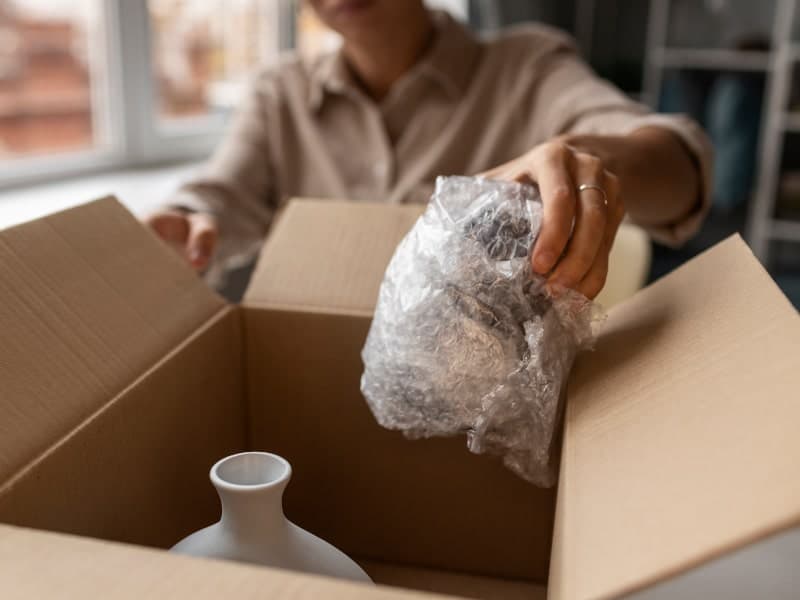
Glassware and crockery
The main job here is to stop movement inside the box. Breakages often happen because items can shift, knock together, or take pressure from above once the box is carried or stacked.
Wrap items so they are separated from each other, but pay as much attention to the gaps in the box as to the items themselves. If things can move around inside, the packing is not doing its job yet. A well-packed box should feel stable when lifted, not as if the contents are sliding around.
Pro tip
Before sealing the box, lift it slightly and tilt it gently. If you can feel items shifting, add more padding or reduce what is in the box.
Do not keep adding fragile items to one box just because there is still a bit of room. A smaller box with less movement and less weight is usually the safer choice. Plates, bowls, and heavier crockery also need more caution than lighter glassware because the box weight builds faster.
Books and other heavy items
Heavy items are where box size matters most. Books, tools, dense kitchen supplies, and similar items become awkward very quickly, and they are easiest to misjudge because each individual item feels manageable on its own.
Use smaller boxes for anything dense. Large boxes encourage overfilling, which is where carrying becomes harder, bottoms start to strain, and stacking gets less stable.
Quick check
If the box already feels awkward while you are still packing it, split it now rather than assuming it will be fine later.
Distribute weight rather than trying to maximise every box. It is usually better to fill two manageable boxes than one heavy box that is difficult to lift safely and awkward to place once it arrives.
Clothes and soft items
Clothes, towels, and bedding are easier to deal with, but they still benefit from a system. Keep them grouped in a way that will help when unpacking, whether that is by room, by person, or by type.
Soft items can also be useful as padding around sturdier belongings, but they should not become an excuse for making boxes vague. If a box contains both linens and something else, the label still needs to reflect that clearly.
These are also the items people tend to throw into the wrong box at the last minute because they seem easy. That can leave you with basic clothes in three different places and no obvious first-night bedding when you arrive.
Mirrors, frames and screens
These items need stable handling more than bulky wrapping. The main risk is not just impact. It is movement, pressure, and awkward carrying.
Pack them so they stay supported and easy to identify. A flat item that can flex, knock against corners, or disappear into a pile of general boxes is much more likely to become a problem in transit.
The other common mistake is making them hard to recognise. If something is fragile and awkward to carry, it should be obvious at a glance what it is, which way up it should go, and that it needs more careful placement than a standard box. Keeping them upright rather than laid under other items also usually makes them easier to handle.
Loose fittings, screws and cables
Loose parts are among the easiest things to lose during a house move because they do not look important until you need them. Screws, brackets, shelf fittings, remote controls, chargers, stands, and cables all become annoying very quickly once separated from the item they belong to.
Bag and label loose parts clearly as you go, not later when you assume you will remember. Keep them with the item wherever possible so setup is easier at the other end.
Pro tip
A small labelled bag taped to the item, or packed inside the same clearly marked box, is usually easier to manage than a separate “bits” box.
This matters most when items have been dismantled. A table, shelf, bed frame, or television stand is much simpler to deal with when the right fittings are attached or packed alongside it, rather than somewhere in a general box marked with a broad room name.
Packing mistakes that slow a move down
A lot of packing stress comes from a few common mistakes that do not always look serious at the time, but create extra friction later.
One of the biggest is overfilling boxes. They become harder to lift, harder to stack, and more likely to split or be set down in the wrong place simply because nobody wants to move them twice.
Another is mixing rooms in the same box. It feels efficient while packing, but it creates hesitation when unloading because the box has no clear destination and no obvious unpacking priority.
Vague labelling causes the same kind of delay. A box marked “misc” or “bits” still has to be opened and checked before anyone knows where it really belongs. That wastes time at the exact stage when you want quick decisions.
Leaving too much until the final few days is another common problem. Packing often feels under control until you reach the things still in daily use. That is when poor sequencing catches up with people.
Awkward items are often underestimated too. Loose shelves, framed prints, lamps, side tables, bundles of cables, and part-dismantled furniture create more last-minute disruption than people expect because they are not neatly box-shaped and do not pack well as an afterthought.
A simple packing checklist to follow
Keep it to this
- Start with what you do not use
- Pack by room, not at random
- Keep last-use items out
- Pack for unloading, not just leaving
- Pack fragile, heavy, and awkward items differently
That is the core packing system for this page. It helps you clear the house in a sensible order, keeps the final days more manageable, and makes it easier to place boxes properly when you arrive.
FAQs
Ready to sort the move itself?
Compare instant quotes from verified local drivers based on your move details, and book online when you are ready.
Compare quotesAbout Compare The Man and Van
Compare The Man and Van helps people compare quotes from vetted, fully insured man and van drivers across the UK.
Our moving guides are written by our in-house team using insight from real bookings and the practical issues that come up again and again on actual moves, including access, parking, loading, timing, and first-day logistics.
When you compare quotes with us, you can see live prices from trusted local drivers and choose a mover that fits your move, your budget, and the level of help you need.


