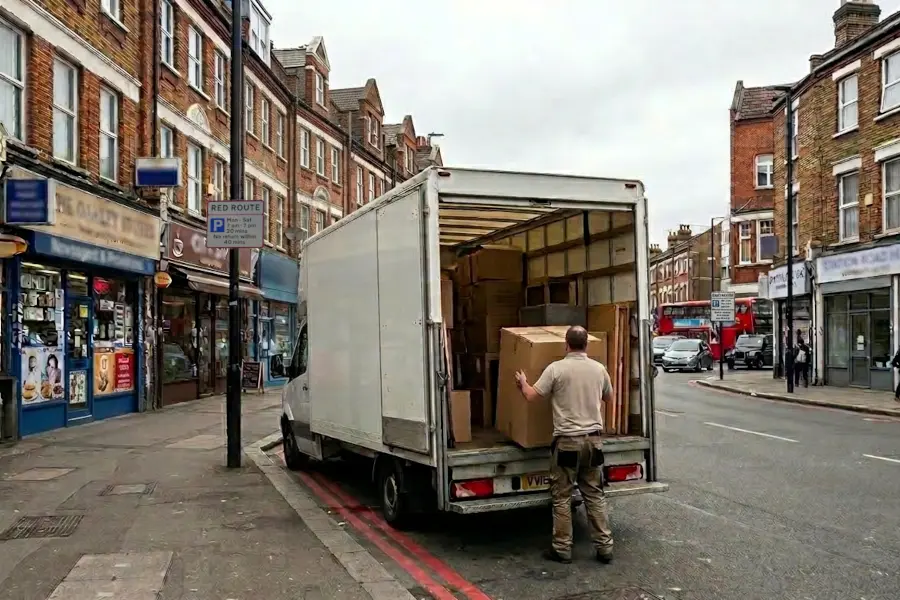
If your move involves a red route, this is one of the biggest exceptions in London moving planning.
Most moving-day parking advice assumes the road outside the property is managed by the local borough. A red route changes that. Red routes are typically TfL-managed, often more tightly controlled, and they can break the normal assumptions people make about suspensions, loading and where a van can stop.
That is why a red-route move needs a different starting point. The real question is not just whether the van can stop outside. It is whether you are dealing with the right road, the right authority and the right stopping plan. For the bigger picture, see our main moving house in London guide. If you already know the move may need a formal parking solution, read our guide to parking permits, suspensions and dispensations in London.
- Quick answer
- Is this a red-route problem?
- What a red route is
- How it changes the plan
- Borough road or TfL road?
- When special planning is needed
- TfL vs borough permission
- What to do if your property is on a red route
- When a side street may be better
- Why building access still matters
- Quick red-route check
- FAQs
Back to top
Quick answer: what changes if your move involves a red route?
If your move is not on a red route, see our guide to CPZ, yellow lines and loading rules in London.
Is this a red-route problem?
This page matters most if:
What Is a Red Route in Practical Terms?
A red route is a major TfL-managed road with stricter stopping controls designed to keep traffic moving.
In moving terms, that means one thing above all: you should not treat it like a normal borough road.
Why red routes exist
Red routes exist to keep traffic flowing on some of London’s busiest roads. Because of that, stopping controls are often tighter than they are on ordinary borough-managed streets.
What makes them different from normal borough roads
The key difference is not just the markings. It is who manages the road.
A red route is typically controlled by TfL, not by the borough in the same way as an ordinary local road. That means it is not simply another yellow-line situation or a routine council suspension issue.
Why this matters for moving vans
For a moving van, the practical implication is simple: the frontage outside the property may not be handled through the normal borough parking process. That is the point where ordinary London moving assumptions often break down.
How a Red Route Changes the Usual Moving-Day Plan
A red route usually changes the move because the normal borough-based plan may stop being reliable.
Borough parking logic may not apply
If the frontage is on a red route, the usual borough solution may not control that stretch of road.
So even if you are used to thinking in terms of suspending a bay, checking standard kerbside restrictions or dealing with the council, that may not be the right route here.
The key distinction on this page
If the frontage is TfL-managed, a borough solution may be irrelevant from the start. Confirming who controls the road is often the first useful step, not a detail to leave until later.
Normal loading assumptions may not be enough
A red-route move cannot simply assume a workable stop will be available outside the property.
Restrictions may be tighter, stopping options may be narrower, and the move may need more deliberate planning than a typical borough-road move.
Timing and setup matter more
This becomes even more important if the move involves:
- upper-floor access
- heavy or bulky items
- lift coordination
- a longer loading period
- uncertainty about where the van can realistically stop
The more demanding the move is, the less you can rely on optimistic assumptions about the road outside.
Borough Road or TfL Road: How to Check
Before booking the move, confirm who actually manages the road.
Start by checking who manages the road
The key distinction is whether the frontage is on a borough-managed road or a TfL-managed red route.
That affects which process may apply, which authority matters, and what kind of stopping plan is realistic.
Do not assume from the address alone
Do not assume based on the postcode, borough name or general area.
In London, nearby roads can differ sharply. What matters is the actual stopping frontage, not just the postal address.
Why this should be confirmed before booking the move
Settle this early because it affects:
- whether the borough process is relevant
- whether a TfL-specific route may be needed
- whether stopping outside is realistic at all
- whether a side-street plan would be more workable
If the move is not actually on a red route, the right next step may be our guide to parking permits, suspensions and dispensations in London. If you need to understand ordinary kerbside restrictions instead, see CPZ, yellow lines and loading rules in London.
When a Red Route Needs Special Permission or Planning
A red-route move becomes a special case when the move depends on stopping directly outside and there is no realistic legal alternative nearby.
If the van needs to stop directly outside
If the move depends on stopping directly outside the building and that frontage is on a red route, the move usually needs more deliberate planning.
That is especially true where there is no workable side street nearby.
If the move is likely to take longer
The longer and more awkward the move, the more likely normal assumptions will fail.
- bulky furniture
- several floors
- longer loading periods
- lift coordination
- repeated trips between property and van
If nearby alternatives are poor
Sometimes the real problem is not just the red route itself, but the lack of a realistic fallback.
If there is no usable side street, the carry distance would be excessive, or the building layout makes off-frontage stopping unrealistic, the move may need more formal planning.
If the road setup makes borough solutions irrelevant
If the frontage is TfL-managed, a borough solution may simply not solve the real problem.
That is the key distinction. You do not want to waste time following a borough route for road space the borough does not actually control. If the building itself is difficult as well as the road, see our guide to flats, estates and access logistics in London.
Red Route Permission vs Borough Permission: What’s the Difference?
A lot of red-route confusion comes from people assuming the normal borough suspension route still applies. Often, that is exactly the mistake.
| Road type | Who manages it | Typical next step |
|---|---|---|
| Borough road | Local council | Check loading, suspension or dispensation options |
| TfL red route | TfL | Check red-route-specific guidance, planning or permission route |
Borough permissions
On an ordinary borough-managed road, the next step may involve council-managed options such as a suspension, permit or other local arrangement depending on the road layout.
That logic applies to many London moves — but not all.
Red route / TfL route
If the frontage is on a red route, the relevant route may be TfL-specific rather than borough-led.
That means different control of the road space, different expectations and potentially a different process from the one people expect when they think about normal council parking.
Why using the wrong route wastes time
Using the wrong route wastes time because it sends you to the wrong authority for the wrong kind of road problem.
- applying to the wrong authority
- assuming a borough suspension solves a TfL frontage issue
- discovering too late that the normal process does not apply
- ending up with moving-day disruption because the road plan was never realistic
That is why the borough-vs-TfL distinction should be settled early, not after the move is already booked.
What To Do If Your Property Is on a Red Route
If your property is on a red route, work through the move in this order:
- confirm the frontage is actually on a TfL-managed road
- do not assume borough guidance applies
- decide whether stopping directly outside is genuinely necessary
- check whether a nearby side street could work instead
- if not, move into the right route early rather than late
- make sure the building-access plan still works with the stopping plan
This is the point where the move usually becomes clearer. Once you know whether the job needs a TfL-specific setup or a workable side-street alternative, you can compare London man and van services with a much more realistic view of what the move involves.
When a Nearby Side Street May Be the Better Option
Sometimes the best solution is not the red-route frontage itself, but the nearest workable legal side street.
That is one of the most important practical distinctions on the page.
Why a side street can be the smarter option
If a nearby side street allows legal stopping or loading and the carry distance is manageable, it may be more practical than building the whole move around a red-route frontage.
That can reduce uncertainty, simplify the plan and avoid unnecessary red-route complexity.
Why this still depends on access realism
This only works if the side-street option is genuinely usable.
A short, manageable carry is one thing. A long or awkward route through stairs, corridors, estate paths or controlled entrances is another.
That is why road planning and building access planning need to be considered together.
If you need to assess the ordinary kerbside legality of a side street, use our guide to CPZ, yellow lines and loading rules in London. If a nearby stopping option still needs formal planning, read parking permits, suspensions and dispensations in London.
Side street vs red-route frontage
- stopping there is legal and workable
- the carry distance is manageable
- the access route into the building is straightforward enough
- the move avoids unnecessary red-route complexity
- there is no realistic nearby alternative
- the carry distance would be too long
- building access is already difficult
- bulky items make off-frontage loading impractical
Sometimes the best red-route plan is not the frontage itself, but the nearest workable legal stopping point. In practice, that is often the simpler and more realistic answer.
Red Routes and Access: Why the Building Still Matters
Even when the road setup is the main issue, the building can still make or break the plan.
Why access can make or break the move
A road solution may look workable on paper but still fail in practice if the building access involves:
- stairs
- lifts
- long corridors
- controlled entrances
- estate walkways
- awkward internal loading routes
Why red-route moves need joined-up planning
This is why red-route moves should not be treated as traffic problems only.
The road plan and the building-access plan have to work together. If they do not, the move can become slow, expensive or impractical even if the stopping issue looked solved. For more on that side of the planning, see flats, estates and access logistics in London.
Quick Red Route Check Before Moving Day
- Is the frontage on a red route?
- Have you confirmed who manages the road?
- Is stopping directly outside essential, or would a nearby side street work?
- If special permission is needed, have you checked the right authority?
- Does the building-access plan still work with the stopping plan?
For the wider London planning picture, return to our full moving house in London guide. If the move may need a formal road-space solution, read parking permits, suspensions and dispensations in London.
FAQs About Red Routes and Moving House in London
About Compare The Man and Van
Compare The Man and Van helps people compare quotes from vetted, fully insured man and van drivers across London and the UK.
Our London moving guides are written by our in-house team using insight from real bookings, so the advice reflects the kinds of access, parking, loading and pricing issues that come up on actual moves.
When you compare quotes with us, you can see live prices from trusted local drivers and choose a mover that fits your move, your budget and the level of help you need.
Ready to compare London quotes?
Once you know whether your move needs a TfL-specific plan or a workable side-street alternative, it becomes much easier to compare quotes properly and choose the right level of help.
Compare London man and van quotes


